

JERSEY CITY, NJ / ACCESS Newswire / August 31, 2026 / The Chinese Musicians Association of North America will present Sound of Harvest 2026, the third edition of its cross-cultural concert series, on September 12 at Rutgers University’s Nicholas Music Center and September 13 at Montclair State University’s Memorial Auditorium.
Now in its third year, Sound of Harvest brings together musicians and musical traditions from China, Japan, West Africa, Europe and the Americas. This year’s program begins with Dunhuang and the Silk Road, then gradually opens outward: from ancient pipa notation to new music, from Chinese strings to the European lute, and from Japanese taiko and Ghanaian drumming to film music and Latin rhythms.
The idea is not simply to place different traditions side by side, but to let them meet.
Beginning in Dunhuang
The concert opens with Riffs and Flow by composer Wang Lu, a work inspired by ancient pipa notation preserved in the Mogao Caves of Dunhuang.
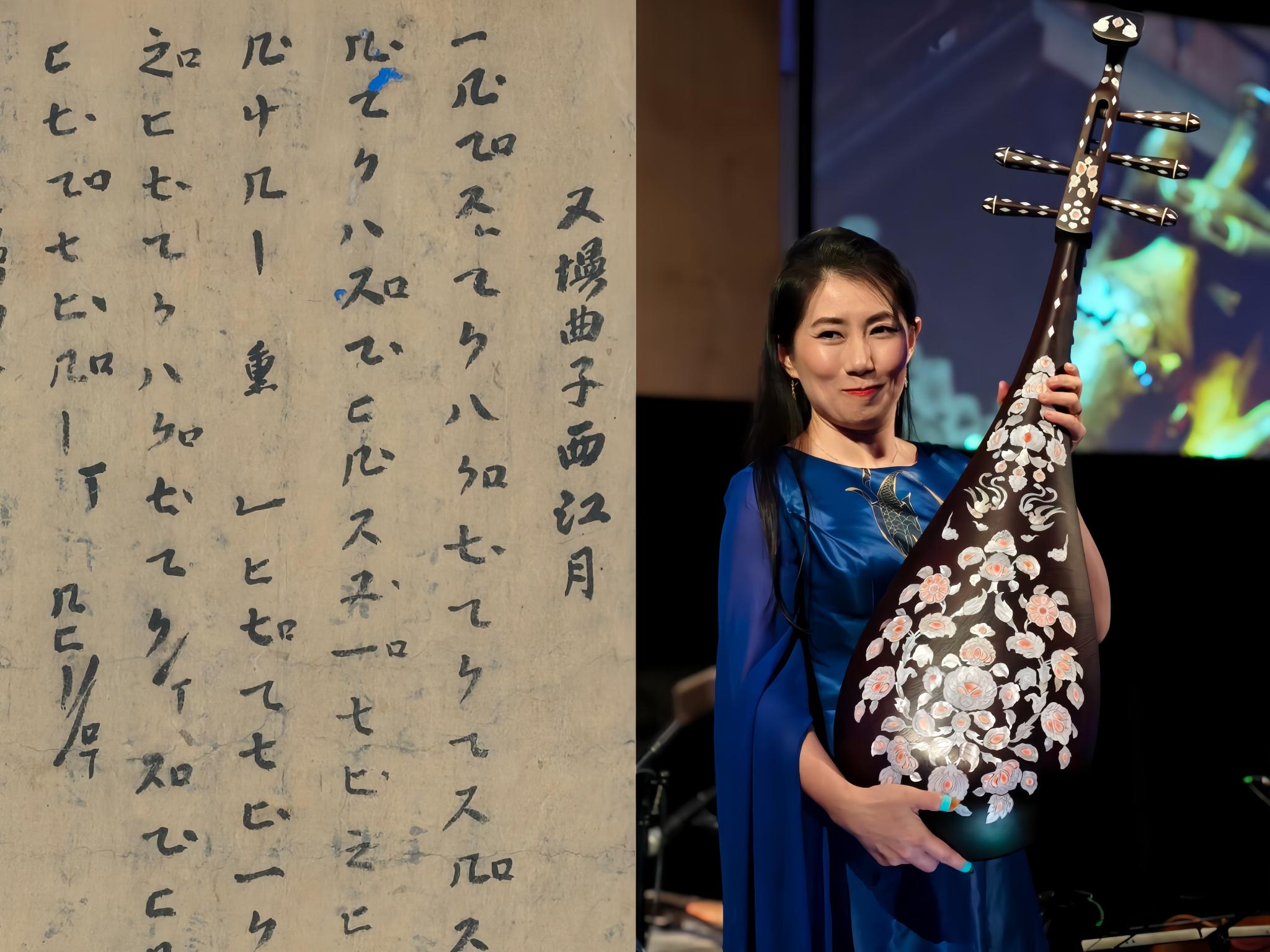
Earlier this year, the work was performed at the Harvard Art Museums with a mother-of-pearl five-string pipa commissioned by Harvard CAMLab and made by renowned instrument maker Cao Weidong based on Tang-dynasty models.
In Riffs and Flow, the ancient notation is not treated as a fixed artifact to be reconstructed note for note. Instead, it becomes material for a new musical exchange. Pipa, erhu, guzheng and piano listen, answer and improvise, bringing traces of a centuries-old musical language into the present.
From there, the program turns to two sharply contrasting works for violin.
Zhan Shu, Assistant Concertmaster of The Cleveland Orchestra, performs Desert of Sorrow, the fourth movement from Tan Dun’s violin and piano sonata Hero, followed by Li Zili’s 1973 Fishermen’s Harvest Song.
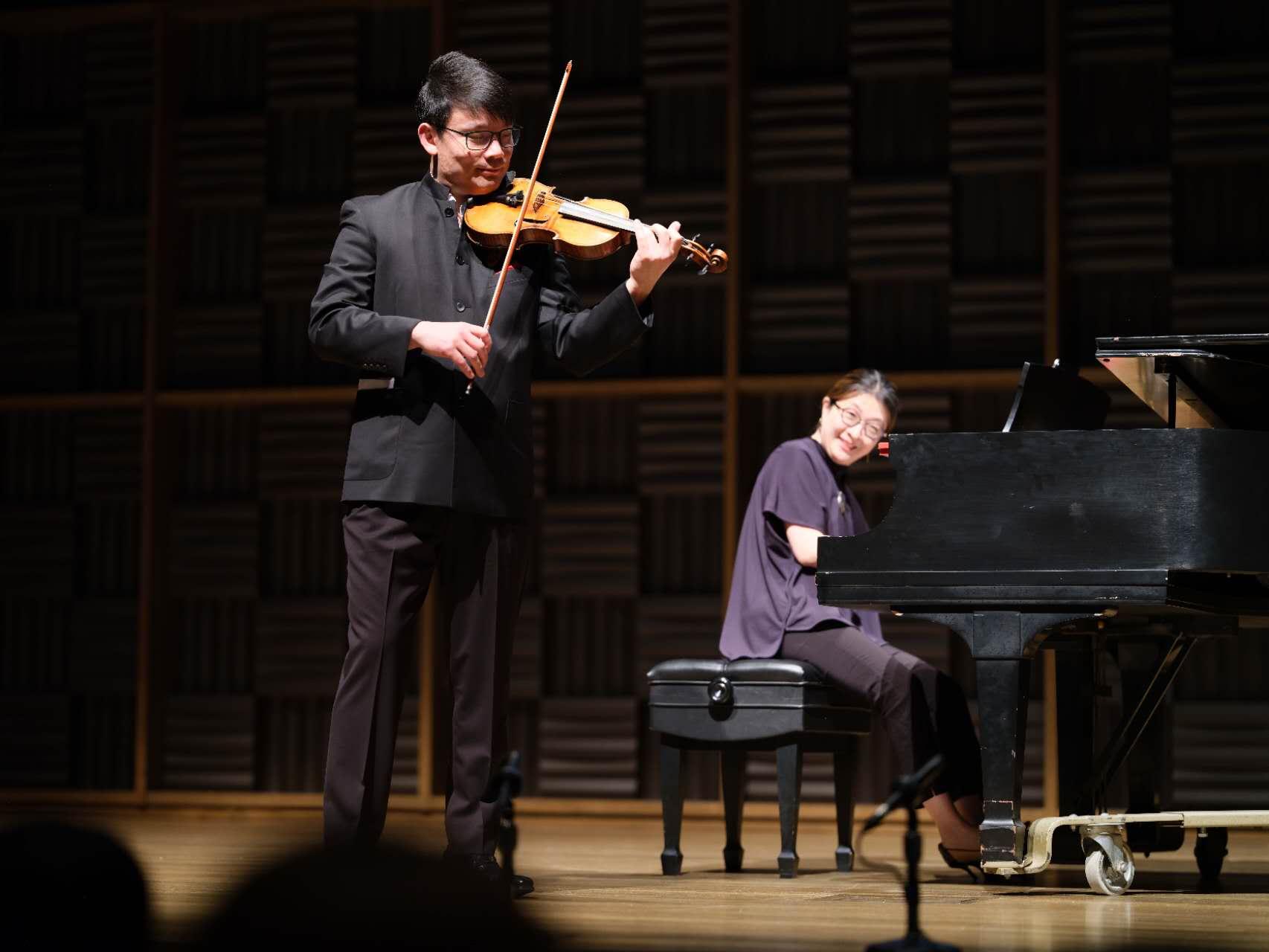
The two pieces reveal very different sides of Chinese musical expression. Tan Dun’s music is stark and dramatic; Fishermen’s Harvest Song is bright, lyrical and rooted in the sound world of Chinese folk music. Heard through the same instrument, the violin moves from the desolation of the desert to the exhilaration of a waterside harvest.
A much younger musical voice follows.
High school composer Tiffany Qianxun Zhao’s original chamber work Blooming Streets grew from her Chinese name, “Qianxun,” and the poetic image of searching through a crowd “a thousand times.” Raised between Chinese and American cultures, Zhao draws on classical Chinese poetry while writing in the musical language of her own generation.
Along the Silk Road
The journey then turns westward.
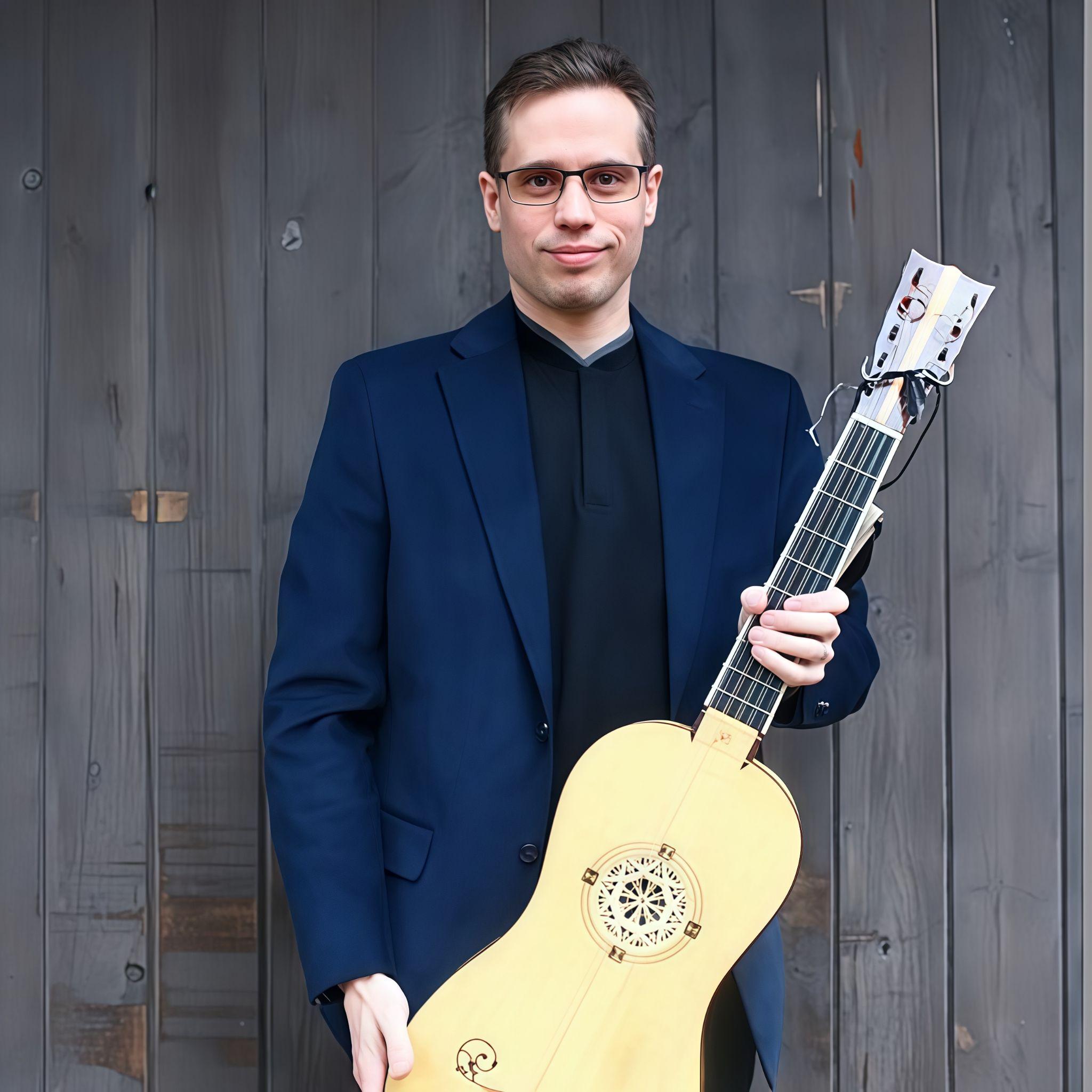
Lutenist Jason Priset, a faculty member at Montclair State University and director of the Lute Society of America’s annual festival, brings early European lute music into a program centered on Asian musical traditions.
The lute and the pipa developed along different historical paths. Still, their presence on the same stage points to a much older story: instruments, musicians and musical ideas have always traveled with people.
Composer Ma Jiuyue’s Hu Xuan Wu brings the first half to a close.
The title refers to the celebrated “whirling dance” that reached China through the Silk Road and became enormously popular during the Tang dynasty. Its arrival is a reminder that cultural exchange is hardly a modern invention. Centuries ago, people were already crossing borders, carrying instruments, dances and melodies with them.
Music changed as it traveled.
From Japan to Ghana
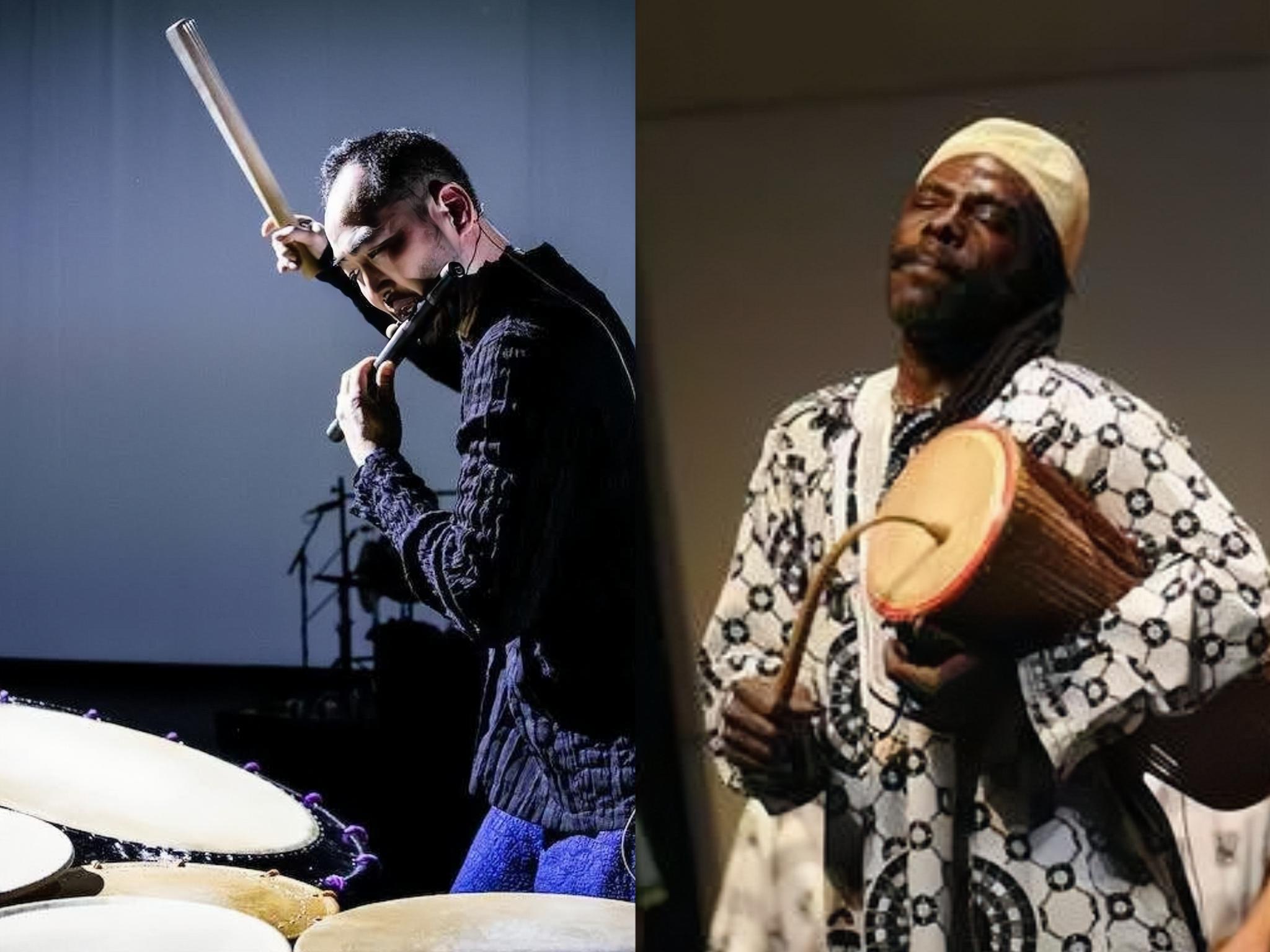
After intermission, the concert moves decisively into the present with Japanese American composer and instrumentalist Kaoru Watanabe.
Watanabe was the first American to become a performing member of the internationally renowned Japanese taiko ensemble Kodo and later served as artistic director of its annual festival. A longtime Silkroad collaborator, he has worked across traditional Japanese music, improvisation, contemporary composition and cross-cultural performance.
At Sound of Harvest, Watanabe performs on taiko and shinobue and joins other artists in chamber music of his own.
The rhythmic conversation then moves from Japan to Ghana.
Kwaku Kwaakye “Martin” Obeng is a Ghanaian master drummer, composer, dancer and educator who has taught Ghanaian drumming at Brown University since 1988. He began playing drums at the age of five and, by seventeen, had been appointed Royal Court Drummer to the high chief of the Aburi-Akuapim region of Eastern Ghana.
His appearance brings another kind of musical experience to the program. Ghanaian drumming is built from layers: drums, bells and shakers create interlocking patterns, while music, dance and communal participation remain closely connected.
For this concert, Obeng will invite the audience to become part of that rhythm rather than simply listen to it.
Watanabe and Obeng come from musical traditions developed thousands of miles apart, yet both make a similar point: rhythm is not only something we hear. It is something we feel physically, often before words enter the picture.
Familiar Melodies, New Surroundings
The program then turns toward music many listeners may already know.
Pianist, composer and arranger Vince di Mura has created a new arrangement of Cinema Paradiso for the concert, featuring mezzo-soprano Lina Zha. Zha will also perform the Latin American classic Bésame Mucho.
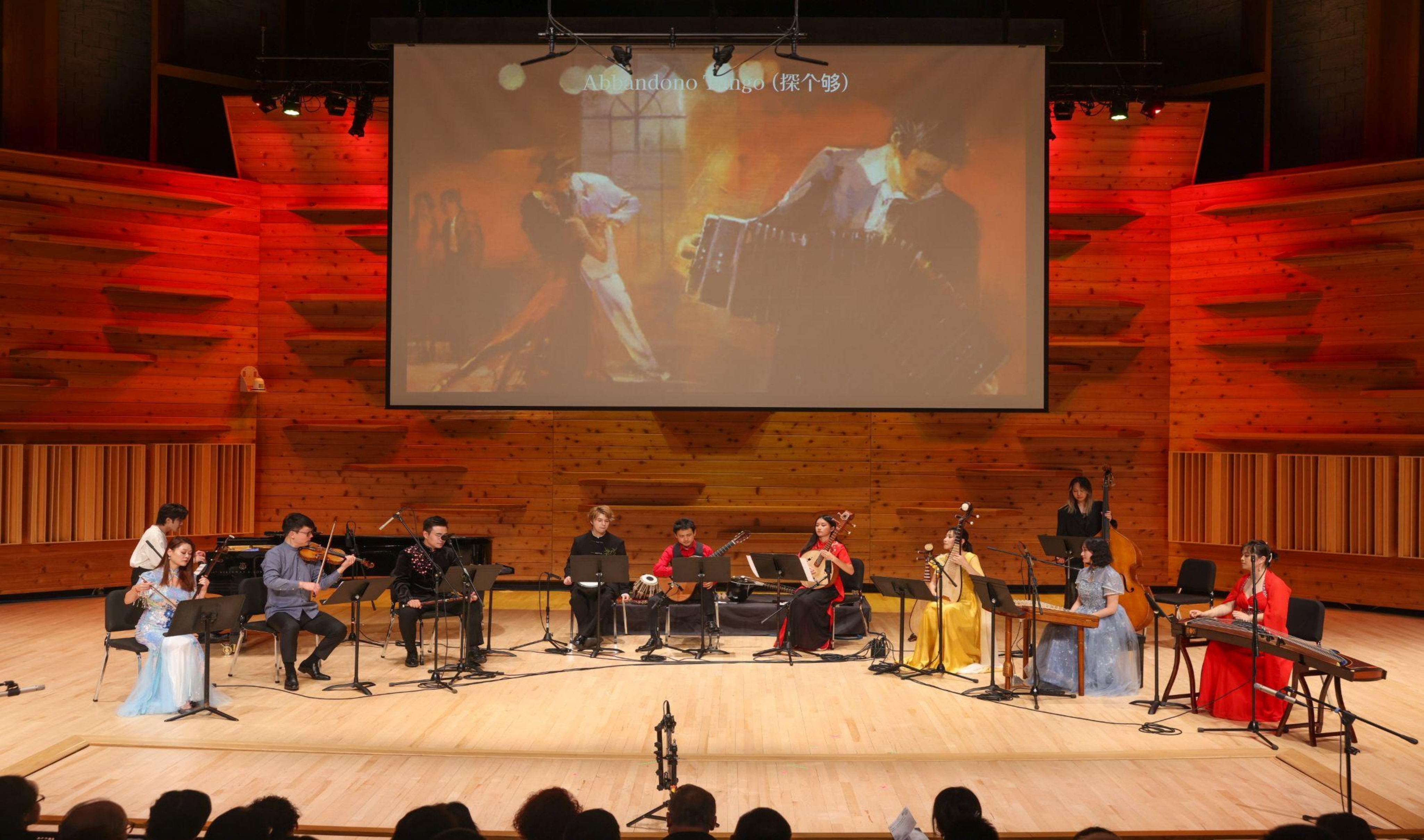
Placed among Chinese instruments, Western strings, piano and voice, familiar melodies take on different colors. The point is not to erase where they came from, but to hear what happens when musicians with different backgrounds share the same musical space.
The evening ends with composer Xiong Junjie’s Passion of the Living (Hua Qian Yue Xia de Re Qing), a work that places the pipa at the center of a lively encounter with Latin rhythm.
Its Chinese title evokes an old poetic image: flowers before us, the moon above us, and people meeting beneath them.
That image gives the concert an unexpectedly fitting ending.
Sound of Harvest 2026 begins with musical traces left behind in Dunhuang more than a thousand years ago. It travels through the Silk Road, Chinese poetry and the European lute, then moves into Japanese taiko, Ghanaian drumming, Italian film music and Latin rhythms.
By the end, the journey has crossed centuries and continents – but the destination is something much simpler.
People meet. They listen. They answer one another.
Tradition continues because the conversation continues.
And with the Mid-Autumn Festival approaching, a program built around travel and encounter returns, finally, to an idea at the heart of the season itself: coming together again.
Event Details
Sound of Harvest 2026
September 12, 2026, at 7:00 PM
Rutgers University, Nicholas Music Center
September 13, 2026, at 3:00 PM
Montclair State University, Memorial Auditorium
For more information, please visit https://chinesemusiciansna.org/.
About Chinese Musicians Association of North America
The Chinese Musicians Association of North America (CMA-NA) is a community of professional musicians based in the United States and Canada, with members from diverse regions of China. Guided by the belief that music is a universal language, CMA-NA promotes cross-cultural collaboration and the exchange of musical traditions, ideas and innovation across geographic boundaries.
Media Contact
Contact Person: Kathleen Kong
Email: hello@chinesemusiciansna.org
SOURCE: Chinese Musicians Association of North America
View the original press release on ACCESS Newswire
